
01
Outline
The silhouette of the blade, sampled around its edge.
Scan an unlabelled key and KeySafe tells you which door it opens, by matching it against the keys you have already saved.
Library works offline
Keys cut from the same blank look almost identical in a photograph. KeySafe measures six separate things about a key and compares each of them against your catalogue.
01
The silhouette of the blade, sampled around its edge.
02
On phones with a depth sensor, the height of the surface along the key.
03
The cut of the teeth, measured as a profile along the blade and reduced to a code.
04
The pockets milled into the faces of the key.
05
The warding grooves running the length of the blade.
06
The shape of the head, including any cutout.
Codes and lettering stamped on the bow are also read, on devices that support text recognition.
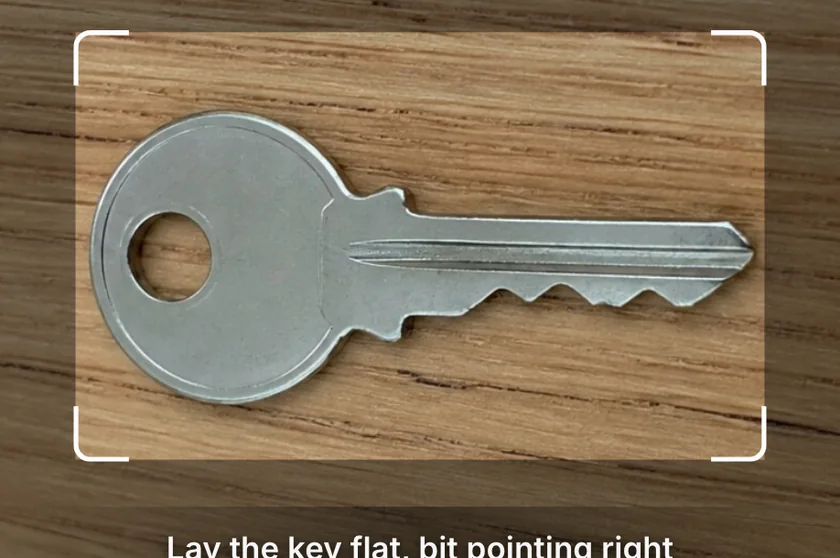
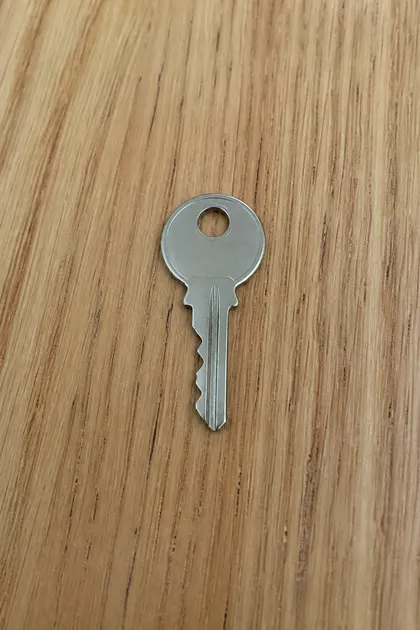
Photograph both sides of the key, lying flat, so the record holds its full profile.
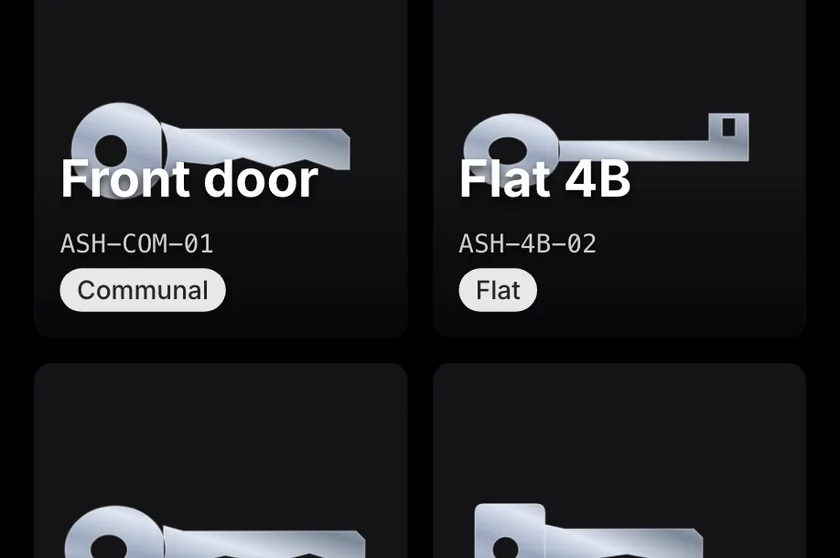
Give it a name: side gate, Flat 4B communal, the lock-up.
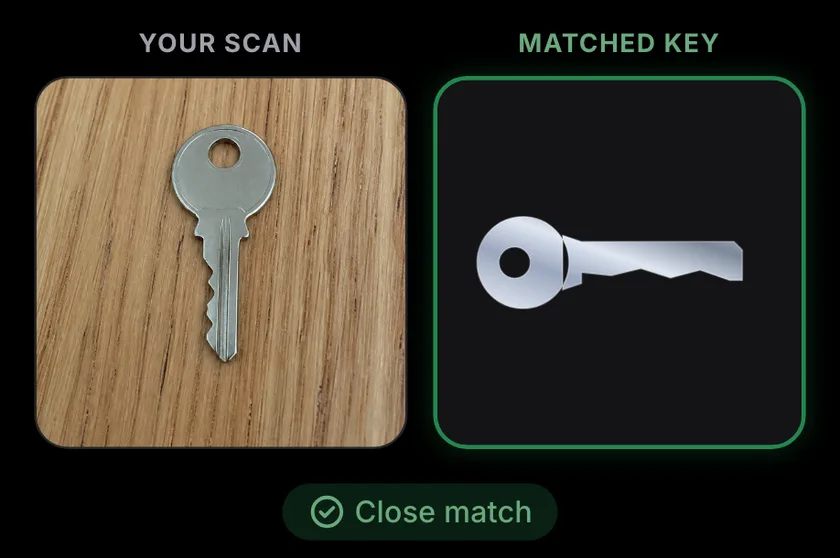
Scan an unlabelled key and KeySafe matches it against the keys you have saved.
Every account is isolated from every other. The catalogue is encrypted in transit, and the app can be locked behind Face ID or Touch ID. We tell you what we collect and why.
Read our privacy policyNo. KeySafe matches a key against the catalogue you have built yourself. There is no public database of key types to look it up in, so a key has to be enrolled once before it can be identified.
Six measurements: the outline of the blade, the bitting profile and its code, dimples, milled ridges, the shape of the bow, and any code or lettering stamped on the key. Devices with a depth sensor also record the key’s three-dimensional profile.
No. KeySafe identifies keys you already hold. It does not produce cutting codes or anything a locksmith could use to duplicate a key.
Your library works offline — browsing, searching and relabelling all work with no connection. Capturing a new scan and running a match currently need a network connection, because the shape processing runs in the cloud.
Devices with a depth sensor record the key in three dimensions. On other phones KeySafe still captures and matches using the camera; the depth pass simply adds accuracy where the hardware supports it.
Only you. Every account is isolated from every other, the catalogue is encrypted in transit, and you can lock the app behind Face ID or Touch ID. You can delete your data at any time from inside the app.
Not today. Each account keeps its own catalogue. If shared access matters to you, tell us at support@key-safe.net — it helps us prioritise.
Download KeySafe: Key Identifier for iPhone and Android.


Questions? We’re here to help.